Lorient

Smoothly,
Naturally

The Artistic Tool

If one could write letters with a filler, a practitioner could freely shape the desired shape on a face, as easy as writing letters. Unlike a poorly made pen with inconsistent bursts of ink, we wanted to present excellence and comfort with smoothness and elegance.

Maintenance of shape and consistency without breaking through smooth injection force

Smooth and Comfortable

Lorient presents a low and consistent injection force, which allows precise procedures at the intended area effortlessly with the exact intended amount. The possibility of tissue damage could be reduced as well, due to the low pressure of the gel when entering the facial tissue that is sensitive. Therefore, even patients who are new to a dermal filler procedure can experience it with no worries.

Smooth and Natural

Just being smooth is not a requirement for a good filler. A good filler should not only be smooth but also maintain its shape while staying in the right place without flowing down. After being injected smoothly into the skin, Lorient enables the desired volume and natural shapes to show with its specially designed properties.

Cleanliness
Inevitably safe

Sometimes, Less Is More

BDDE, the crosslinking agent for hyaluronic acid, enables a dermal filler to have more longevity and viscoelastic properties. However, when it does not participate in crosslinking, the residual BDDE is classified as a hazardous substance. After years of research, we have developed a technology that enables us to remove residual BDDE efficiently. But... what if it was possible to reduce the amount of BDDE used at all? If longevity and viscoelasticity are controlled by the amount of crosslinking agent used, then more would be used to reach higher longevity and viscoelastic properties. However, we have found that this could increase residual BDDE, and also cause the gel to be excessively hard causing difficulty to the practitioner. To solve such issues, we have successfully developed a technology that increases the efficiency of crosslinking. Now, even with the use of minimal BDDE, we are still able to achieve our desired viscoelastic properties for a filler that would result to more natural and safer results.

Less, in Numbers

We believed that how much we had taken away should be shown in numbers, not words. The degree of modification (MoD) tells how much cross-linker is bound to the hyaluronic acid: the number of BDDE per 100 HA disaccharide units. The lower it is, the closer the HA stays to its natural form, and the less the body treats it as foreign.1 Yet not every bound BDDE actually cross-links. A pendant BDDE, attached at one end only, adds nothing to the gel and only raises the MoD; it is closer to an impurity.3 So alongside the MoD we look at the cross-linker ratio (CrR), the share of BDDE bound at both ends. A low MoD with a high CrR means we spared the cross-linker and still wove the gel properly. Recent textbooks on fillers reach the same conclusion: rheology, cohesiveness, MoD, NMR data, and impurities should be read together when choosing a filler.4

The four ways a BDDE cross-linker can sit inside a hyaluronic acid gel A B C D

The four ways a BDDE cross-linker can sit inside a hyaluronic acid gel

  • ACross-linked BDDE, bound at both ends. It gives the gel its properties and counts toward the cross-linker ratio (CrR).
  • BPendant BDDE, bound at one end only. It adds nothing to the gel and only raises the degree of modification (MoD).
  • CDeactivated BDPE, a cross-linker that never bound and was hydrolyzed.
  • DResidual BDDE, an unreacted cross-linker. 2 ppm or lower is the accepted safety threshold.

MoD = (A + B) ÷ HA disaccharide units × 100 · CrR = A ÷ (A + B)

The Lowest Degree of Modification

A study examined thirteen fillers on the market by nuclear magnetic resonance (NMR).1 Their degrees of modification ranged widely, from 2.2% to 17.1%, and the lowest value was Lorient, while its cross-linker ratio stood among the higher ones. The paper describes a low MoD paired with a high CrR as efficient cross-linking, with less cross-linker and less BDDE left behind. These numbers confirmed that our decision to take away from the very start had been right.

2.2%Lorient's degree of modification1
2.2 – 17.1%Range across thirteen fillers on the market
0.227Lorient's cross-linker ratio (range across the thirteen 0.014 – 0.394)

Controlling Aspects Invisible to the Naked Eye

We seriously considered our role as a manufacturer when it comes to the side effects of fillers. We wanted to manufacture a filler - considered a medical device - with the same strict specifications as pharmaceuticals. By complying with pharmaceutical GMP standards, we control everything in the production process from incoming of materials to release of finished products very strictly with most procedures being performed in cleanroom areas. As a result, this enables us to prevent the inflow of insoluble particles and microbes invisible to the naked eye (as small as 25 microns), which can cause inflammatory reactions.

The Cleanest Filler

Insoluble particles are tiny foreign matter drifting undissolved inside a product: metal shed from equipment, aluminum from glass syringes, silicone oil used as a lubricant. Mixed into a filler that stays in the body for months, they can seed delayed inflammatory reactions and granulomas.2,3 Because fillers are classified as medical devices, most countries set no particle limit for them. We designed our process from the very beginning with U.S. FDA approval in mind, and so we hold ourselves to a standard fillers are never asked to meet: the limits the U.S. Pharmacopeia (USP <788>) sets for particulate matter in injectables.2

≥ 10 µm
No more than 6,000 per containerParticulate matter limit for injectables (USP · Ph. Eur.)
≥ 25 µm
No more than 600 per containerParticulate matter limit for injectables (USP · Ph. Eur.)
Lorient
The fewest foreign particles among twelve fillers on the market1,246 particles ≥ 10 µm · 82 particles ≥ 25 µm per 1 mL (as measured in the study, mean of three runs). Both limits are met.2

One study dissolved twelve fillers on the market completely with hyaluronidase and examined what remained on a 1 µm filter under an electron microscope (SEM) with elemental analysis (EDS).2 Seven of the twelve exceeded the injectable limit for particles of 10 µm and larger, and silicon, aluminum, and iron were found in some. The only filler in which nothing but the filter material itself was detected was Lorient. This is what our resolve to remove even the invisible has come to.

Beyond General Standards

We believe that maintaining high purity is the easiest way to ensure the reliability of our product. Such is the reason why we purposely set standards more stringent than general standards regarding impurities. As a result, we could reduce the amount of residual BDDE and endotoxin to levels not only less than our strict in-house standards, but also lower than the detection limits of high-grade testing equipment.

A review of the causes of delayed inflammatory reaction names the risks inherent in a filler itself as residual and pendant BDDE, impurities mixed in during manufacturing, low-molecular-weight hyaluronic acid, and endotoxin, and concludes that an ideal filler should be as pure as possible.3 The accepted threshold for residual BDDE is 2 ppm.1 Our standard was never the threshold, but the detection limit.

References

  1. 1 Lee W, Yang EJ. Structural Analysis of Hyaluronic Acid Fillers Using Nuclear Magnetic Resonance: Implications for Quality Control and Clinical Performance. Polymers 2024;16(20):2878. doi:10.3390/polym16202878
  2. 2 Lee W, Rho NK, Yang EJ. Determination of Hyaluronic Acid Dermal Filler Impurities Using SEM/EDS analysis. Polymers 2023;15(7):1649. doi:10.3390/polym15071649
  3. 3 Lee W, Shah-Desai S, Rho NK, et al. Etiology of Delayed Inflammatory Reaction Induced by Hyaluronic Acid Filler. Archives of Plastic Surgery 2024. doi:10.1055/a-2184-6554
  4. 4 Lee W. Advances in Hyaluronic Acid Filler Injections. Springer 2024. doi:10.1007/978-981-97-6528-7

Delicate and Solid,
Firm Beauty

Forms of architecture that have remained timeless are the essence of art and technology. Delicate and elegant yet massive and sturdy pieces of historic architecture that have stood the test of time still exist with us to this day.

STORMTM, The Technology Behind Lorient's Quality

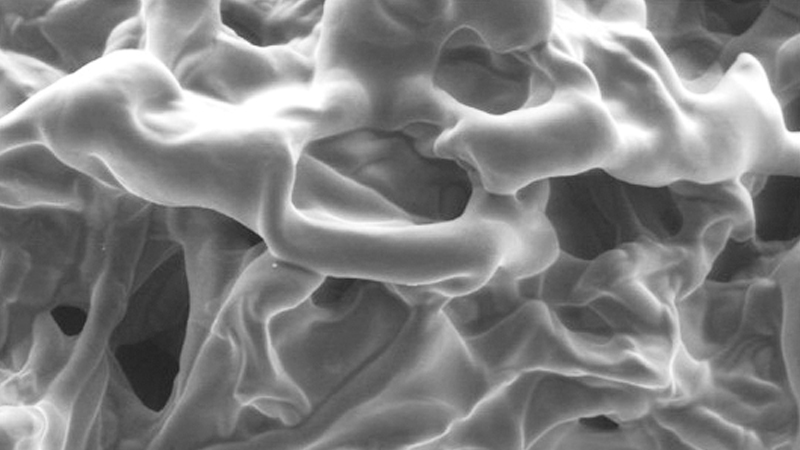
Each chain of hyaluronic acid is weak. We weaved these chains delicately and densely into a 3-dimensional network with a large porous structure. The specialty in this technology lies in the creation of the solid porous structure from use of minimal crosslinking agents. The lowest degree of modification and the high cross-linker ratio shown above are the numbers this technology leaves behind.

Cross linking technology that enables firm and elastic structure

Structure Full of Life

This solid structure plays a significant role as a support in your skin for as long as it is needed and provides the mechanical strength to maintain volume. However, unlike structural architecture built from tons of concrete, Lorient's porous network structure acts as passages for cells, water molecules, oxygen, and nutrients. Therefore, this structure naturally sits within the tissue, full of life.

Scanning electron microscope image showing the porous cross-linked network structure of Lorient gel

A Scanning Electron Microscope (SEM) image of Lorient gel.

Long-Lasting Beauty

Our technology-integrated structure occupies a space within the skin while augmenting the volumizing capacity. Moreover, being similar to the structure of the dermis, it naturally settles naturally with excellent longevity.

Still There, a Year Later

Forehead and temples, nose and chin, tear troughs and mid-cheek. In a study that placed Lorient in these areas and followed them in photographs for a year, the filler stayed where it was placed and kept its volume.5 No delayed inflammatory reaction was observed along the way.

Unmoved by Heat

Energy-based devices such as radiofrequency and HIFU are used together with fillers more and more often. In an experiment in which Lorient was placed in cadaveric tissue and heated to 60 °C for five minutes, Lorient neither blocked the heat nor changed its shape or position.6

Dissolves Cleanly When It Must

The greatest virtue of a hyaluronic acid filler is that it can be dissolved with hyaluronidase when needed. How readily it dissolves is decided by its degree of modification.7 With the lowest MoD and a porous structure, Lorient dissolved steadily, in proportion to time, in a degradation test.7 In a moment like a vascular complication, when it must dissolve right now, predictability is safety.

References

  1. 5 Lee W, Koh IK, Kim KM, et al. Assessing the Practical Application of Rheological Properties of Hyaluronic Acid Fillers - A 1 year Follow-Up Photographic Analysis. Aesthetic Plastic Surgery 2023. doi:10.1007/s00266-023-03632-4
  2. 6 Yi KH. Energy-Based Devices and Hyaluronic Acid Filler, Polymer Filler, and Threads: Cadaveric Study. Journal of Cosmetic Dermatology 2024. doi:10.1111/jocd.16467
  3. 7 Lee W. Five Factors to Consider before Treatment of a Hyaluronic Acid Filler-Induced Vascular Complications. Archives of Plastic Surgery 2022. doi:10.1055/s-0042-1751102

Where It Should Be

Familiar to Your Body

We conducted endless research to make Lorient similar to the human skin, for you to feel as if it was originally a part of your body. For your body not to recognize the filler as a foreign substance and minimize side effects caused by immune reactions, Lorient has components similar to the skin. Lorient was designed to have an osmotic pressure of 300 mOsm/kg, which is extremely close to the environment in human body. Therefore, when injected, the sense of being a foreign body and pain would be minimized.

Inevitable Results

With a filler that settles as if it is your own skin tissue, barely causes side effects. We proved that Lorient is safe and reliable through the comparative clinical study with a world-leading product globally recognized for its safety and efficacy for decades. With this safety proven by actual data, Lorient has obtained the approval from the Korean MFDS and the European EC certification.

Make Your Selfie Match Your Mirror Image

Many misunderstand that the purpose of a filler is only to fill wrinkles and lift up the facial skin. Lorient does not agree with such thoughts. Beyond simply filling for volume, a dermal filler should turn your desired look into a reality. Just as you have imagined, making your selfie feel closer to your real look. This is Lorient's definition of the essence of a filler: as if it has always been a part of you.

PRODUCT PUBLICATION